About This Episode
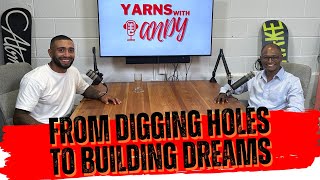
Daniel (Dan) Henderson is the general manager of the construction and development arm of TRC (Tāmaki Regeneration Company), the place-based, government-and-council-owned developer regenerating three east-Auckland suburbs, Glen Innes, Point England and Panmure. He joined in March 2022 to a "baptism by fire": zero staff, no funding, and a mandate to turn 2,500 ageing 1940s-50s state houses into a target of ~10,000 homes over roughly 20 years, at scale, while never displacing the existing community. The conversation ranges across TRC's "Tāmaki Promise" (guaranteeing residents a home within Tāmaki), its shared-home-ownership programme "Own It," the "continuum of housing" from emergency to market, and how TRC procures through a six-builder competitive panel using its own adapted NZS 3916 design-and-build contract. Dan and Andy also debate the industry's boom-bust cycle, arguing social-housing delivery should be a counter-cyclical lever (build when the market is quiet, pull back when it peaks), and construction's slow uptake of digitisation and AI. This is Dan's first-ever podcast appearance; Andy discloses he has been TRC's programme manager for two years.
Key Topics Discussed
- TRC / Tāmaki Regeneration. place-based developer; shareholders 59% government / 41% Auckland Council; "godfather" origin under Bill English transferring 2,500 state homes; 170+ hectares across three suburbs where TRC owns ~half of 5,000 homes and ~half the land.
- Three arms of TRC. (1) development (demolish old, build fit-for-purpose homes), (2) tenancy management of 2,500 homes / 10,000 residents by a community-drawn team, (3) socio-economic development (1,000+ people employed via jobs & skills hub, cadetships through build partners).
- The Tāmaki Promise & social licence. early protests (people chaining themselves to diggers) born of displacement fear; the promise to rehome within Tāmaki; social licence "hard to earn and very easy to lose."
- Shared home ownership ("Own It"). starts with financial literacy / mortgage-readiness coaching; 5% buyer deposit, TRC holds 25-30% equity for up to 20 years (most repay in tranches at years 5 and 10), bank funds ~70%; de-risks the buyer below LVR thresholds; capital gain on TRC's equity recycles into the programme at near-zero cost to the taxpayer. One 25-home development freed up 10 social houses as owners stepped up.
- Continuum of housing. emergency → social → affordable rental → private rental → home ownership; mobility along the continuum as the goal.
- Procurement & contracts. six-builder competitive build panel; IP-sharing on design and materials; TRC's own adapted NZS 3916 ("TRC 3916") standardised so builders know the terms in advance; design-and-build (sometimes off bulk-and-location) preferred to push control and consenting speed to builders and cut the RFI paper war.
- Kāinga Ora interface. history from Housing NZ → Kāinga Ora absorbing development functions → the now-disbanded LEAD alliance; KO delivers horizontal infrastructure (services to the boundary), TRC does all vertical build in Tāmaki.
- Regulation & cost. plan-change churn (PC120, PC78/79), natural-hazard/flooding standards mid-project, cost inflation that "never goes below zero," fuel-driven civils cost pressure, PVC pipe as the next possible material crisis; credit to National for overseas materials equivalency (Aussie pre-approved products) and RMA reform; the sector's core need is certainty (TRC has ~3 years pipeline to June 2029, 754 homes by 30 June).
- Boom-bust & counter-cyclical building. social housing should build when the market is quiet and pull back at the peak (2021) so government doesn't compete for private resources and inflate prices; a "lever" that's easy in principle, hard to execute given consenting lead times.
- Digitisation & AI. construction among the least digitised sectors; TRC "crawl before you walk" (systems and process before tech); appetite for AI in consenting/plan-checking and integrated design-price-measure workflows; Andy's caution that AI is poor at reading 2D PDFs (OCR hallucination).
Notable Quotes
- Daniel Henderson: "If you live in a house in Tāmaki and we need to redevelop it, we guarantee that we will find you another home within Tāmaki." (the Tāmaki Promise)
- Daniel Henderson: "It's a social licence which is hard to earn and very easy to lose."
- Daniel Henderson: "50% of what it takes to build a house is construction. The other 50% is all the stuff up front, and that's the stuff that actually is really hard."
- Daniel Henderson: "You've got to be able to crawl before you can walk, and you've got to be able to walk before you run. You need good systems, good processes before you can actually implement digitisation."
- Andy Alagappan: "The cost of processing paperwork is insanity in New Zealand. That's the waste, complete waste in the industry." (on one-RFI-per-working-day)
Guest Background
Born and bred in the "mighty Waikato," now a North Shore ("Shore boy through and through," Takapuna/Devonport) resident with four children, two adult kids (one making him a granddad to Lucas, ~3) and 17-year-old twins about to head to university. Around 30 years in real estate/property, entering via a "property administration" degree pamphlet handed out on his last day of school (pre-internet). Career spans multiple developers including Auckland Airport (part of the Quad) before joining TRC in March 2022 as GM of its development/construction arm, building the function from zero staff and no funding. Describes development as "inherently difficult" but the most rewarding sector, "if we do our job well… we leave a legacy for others to enjoy." This was his first podcast appearance.