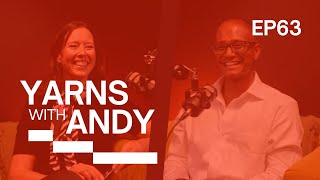
James Hunt
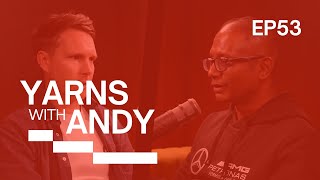
About This Episode
The podcast's second episode and Andy's first deep dive into risk management as a discipline, with James Hunt, the project-controls + risk specialist Andy worked alongside at Auckland Light Rail and Eastern Busway. James opens with the ice-breaker that everyone hits ("I'm not the racing driver") and walks through one of the most unconventional construction-career origins in the podcast: a master's degree in history + full-time professional rugby in the UK before falling into a small Dorset-based risk consultancy that focused on getting projects through Treasury funding. Two days of training; then on to Crossrail, East London Extension, Heathrow, Cross River Tram, West London Tram, AT, Waterview, Connell Dale, Fletcher's, CRL, PITA, Auckland Light Rail, and Eastern Busway, and at the time of recording, twelve months running his own consultancy. James reframes risk as "the effect of uncertainty on your objectives" but the substantive argument of the conversation is that risk management is a relationship-and-conversation discipline, not a register-filling exercise, "you need to become an expert at hanging out with experts and listening." His "what I can't hold by love I won't hold with force" maxim becomes one of the early quotable spines of the podcast. The conversation also surfaces two concepts that recur across the next 80 episodes: the fear-of-action atrophy in NZ Crown procurement (illustrated through a procurement-mistake story where a $400k legitimate claim gets settled at $150k yet nobody in the client organisation will sign it off because of reputational risk), and the back-to-back risk-burden problem when main contractors flow head-contract risk down to small subbies who lack the relationship leverage or balance sheet to carry it. James also flags the brain-drain risk early, eight years before he himself returns at Ep 50 to announce he's leaving NZ for Australia.
Key Topics Discussed
- Risk Management, definition + reality. academic: "the effect of uncertainty on your objectives." Practical: "stuff happens, no matter what plan you make", James's flashing-text conference-slide framing. Risk processes are participatory only when people see value; otherwise they degenerate into compliance documents.
- Risk = relationships. "On a daily basis my life largely consists of discussions and conversations with people about risk… you need to become an expert at hanging out with experts and listening and being able to extract from them different items." COVID disrupted the informal-tea-room channels that risk work depends on.
- The "what I can't hold by love I won't hold with force" maxim. James's principle on getting risks elevated. Build relationships before asking for things.
- NZ conflict-aversion as a risk-management challenge. "People are terrified of conflict, especially in New Zealand culture. The risk management process is a great way to elevate something that needs to be spoken about" without making it personal.
- Fear-of-action atrophy in NZ Crown procurement. James's story: a procurement default, $400k of legitimate claim from a missed-bid contractor, settled at $150k, and then nobody in the client organisation could be found to sign it off. Not because the deal was bad, because no one wanted reputational connection to the original procurement mistake. "The authority needs to support people when they make mistakes as well as when they get it right." Anticipates Ep 49 / Ep 72 / Ep 65 systemic compliance critiques.
- Australian-clients-no-longer-approving-design pattern. Andy's emerging observation: clients refusing to accept design submissions to keep contractors fully accountable to PR-Mr-set requirements. Legal protection at the cost of project outcomes. "We need an ACC-style no-blame accident culture for projects."
- NZ's negotiating culture vs international contractor expectations. historical NZ pattern: "we always cut deals" + take a loss on this job to make money on the next. International contractors arriving for Tier 1 jobs bring less long-term-relationship-tolerance + more "we will not accept a loss" commercial discipline. "If contractors are going to be expected to lose then they've got to be allowed to win", proto-formulation of the risk-sharing argument the podcast develops over 80+ episodes.
- Back-to-back subcontract risk-burden problem. main contractor flows head-contract risk through back-to-back subcontracts; small subbies (NZ$2m turnover) end up carrying head-contract liability on civils-scale jobs. "Just no way that an organisation of that size should be expected to take that type of burden." Direct precursor to Ep 24 subbie-collapse stat ("50-60% of public notices = construction liquidations"), Raine Selles Ep 10 subbie-vulnerability framing, and Ep 57 zero-disputes alternative.
- Consulting vs corporate employment. both Andy and James are 12 months into independent practice; share the uncertainty. "The certainty you get from a corporate employer is not really as certain as you think it is." Andy ties this to his SPC genesis during COVID lockdown.
- Personal branding via Attention Seekers. Andy mentions the Attention Seekers agency engagement that drove daily LinkedIn posting; "identity-forming." Pattern repeated in Ep 50 when James returns.
- Marketing-yourself-as-leader vs as-doer challenge. James reflects: his career arc was leadership-context (programme-controls leader); when consulting, you become a doer again. "If I said hey, I'm a programme guru, that's an easier thing to formulate around, to put a box around", but that's not what he wants to do.
Notable Quotes
James [00:41]: "I did a master's degree in history. I was playing rugby full-time… The fact that I ended up working construction is something I'd never anticipated."
James [04:45]: "The certainty you get from having a corporate employer is not really as certain as you think it is either."
James [05:11]: "Sometimes you think, am I better off managing that for myself and saying I'm the person who will find the work, rather than making yourself the passenger on somebody else's journey."
James [08:16]: "[Risk is] the effect of uncertainty on your objectives."
James [09:39]: "You need to become an expert at hanging out with experts and listening and being able to extract from them different items."
James [12:53]: "What I can't hold by love I won't hold with force."
James [12:01]: "People are terrified of conflict, especially in New Zealand culture. The risk management process is a great way to elevate something that needs to be spoken about."
James (paraphrasing fear-of-action): "The authority needs to support people when they make mistakes as well as when they get it right."
James (on international contractors): "If the contractors are going to be expected to lose then they've sort of got to be allowed to win."
Guest Background
James Hunt holds a master's degree in history and played rugby full-time in the UK before falling into construction risk consulting via a mutual contact. The mutual contact ran a small Dorset-based risk consultancy focused on Treasury-stage funding work, "make sure that projects got the right amount of money." Two days of training in Dorset; then ten years in pure risk on Crossrail, East London Extension, Heathrow, Cross River Tram (shelved), West London Tram (shelved), back to NZ for Auckland Transport, Waterview Tunnel (via Connell Dale → Fletcher's), CRL, PITA, Auckland Light Rail (where he and Andy first worked together), and Eastern Busway (their second engagement together, the same Acciona/EBA programme that becomes ACCI_EASTBWY_MIX in the SPC Cortex). At time of recording, twelve months running his own consultancy with three long-running client engagements.
James returns at Ep 50 (Aug 2024) to announce he's leaving NZ for Australia, the brain-drain return-of-guest moment that anchors the brain-drain timeline insight.
James also appears on the Ep 28 Procurement Panel alongside Raine Selles, Matt Stanford, and Martin Edwards, where he names the "NZ risk budget 5% vs UK GRIP 20%" stat that becomes a Cortex headline data point.