Alex Kay
About This Episode
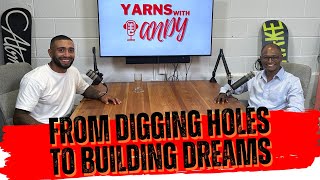
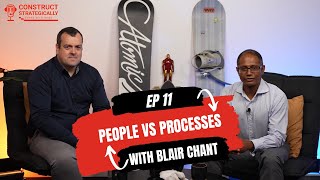
The inaugural episode of Yarns with Andy. Alex Kay, a UK-trained quantity surveyor at Southbase Construction, two months into NZ, joins Andy for the first conversation that becomes the podcast's defining genesis moment. They are working together on a confidential Auckland project where, for the first time in either of their careers, all four dimensions of construction are fully integrated: time, cost, design, and people. Out of this conversation comes the "diamond" framework that Andy explicitly cites later in the same episode as the founding logic of Strategic Planning Co, "when I actually was starting the company, I said, I need one thing to focus on. What's that one thing I will focus on to add value? And that's when I kind of came up with this whole diamond drawing, integrating the work breakdown structure, the cost, the people, and the design." They cover the NZ-vs-UK transition (Alex finds NZS 3910 / 3916 substantially similar to JCT but more open to interpretation; he's never personally seen FIDIC used in the UK); seismic design as the standout NZ-specific learning curve; the labour-shortage signal already visible in 2022; risk sharing under open-book procurement and the lesson from the recent Armstrong Downs subcontractor collapse; cost-loaded P6 programmes (first time fully integrated); and a vision for point-cloud-laser progress tracking, drone-driven cut/fill volumes, and tendering directly off a 3D model. Andy's "Google Maps" analogy debuts here, project controls is "the right information to the right person at the right time", and his "interrelatability of data" critique surfaces ("the minute you don't have interrelatability of data, you're not making data-driven decisions anymore. You're making emotionally-driven decisions"). The episode also references Project 13 from the Institute of Civil Engineers as a contract framework that bakes construction digitalisation into risk allocation, anticipating the NEC-vs-NZS 3910 debate that becomes a recurring theme across the next 80+ episodes.
Key Topics Discussed
- 4D Planning, Andy's "diamond" framework. Time + Cost + Design + People as four equally-weighted dimensions. First time either had fully integrated all four on a project. Alex initially names "time, cost, quality" + "design"; Andy adds "people", "without people, you're not going to deliver anything." The diamond drawing is named verbatim as the SPC founding focus.
- NZ vs UK Construction. Alex finds head contracts and subcontracts substantially similar UK ↔ NZ; main NZ-specific difference is seismic design ("a completely new field for me to have to get involved in"). NZS 3910 / 3916 are more streamlined than JCT; FIDIC very minimal in his UK experience.
- Labour Shortages. NZ pipeline-vs-skilled-resource mismatch already visible in mid-2022. Border closure during COVID compounded the gap. "There's not enough of them, especially with borders being shut for two years." Material procurement also challenging, "anything that comes from a road has been challenging."
- Construction Digitalisation. Cost-loaded P6 programmes; integration of 3D model into 4D planning ("first time I've actually fully integrated all four elements on any project"); point-cloud laser scanning for room-by-room progress tracking; drone-driven cut/fill topography volumes; vision: linking point-cloud scans back into P6 to auto-update programmes; sending the whole tender scope digitally off a 3D model.
- Contracts. NZS 3910 is "open to interpretation" (Alex), fair to main contractor, "not necessarily fair to a subcontractor." JCT is a little more prescriptive on rules for assessing variations. NEC is "quite a collaborative way of working" with shared-risk philosophy. Project 13 from ICE flagged as a forward-thinking digital-risk-sharing contract, "if you like reading contracts, it's a good read."
- Risk Management. Open-book procurement on a recent Auckland university lab complex; piling ground-condition risk priced in transparently and passed through with realistic allowance. Risk should "be placed with whoever is best able to control it." Anticipates Shane Brealey's Ep 57 proof of zero-disputes / no-retentions / 4-page-subcontract by 4 years.
- Subbie risk + the Armstrong Downs collapse. recent collapse cited; Alex's prescription: "interrogate the costs you receive" + "make sure subcontractors made the right allowances" + risk-sharing not just risk-passing.
- NZS 3910 due for revision. already known in mid-2022 ("there's a whole committee working behind a revision"). Ep 04 / Ep 43 / Ep 56 / Ep 69 / Ep 77 all return to this thread; NZS 3910:2023 ultimately landed in 2023.
- The Google Maps analogy. Andy's debut framing: project controls = pushing the right information to the right person at the right time, like Google Maps tells you about traffic only when it matters. Re-used and extended across the podcast.
- "Interrelatability of data" critique. When cost data, programme data, and methodology data don't share a common language / WBS, decisions become emotional rather than data-driven. The "all of us talking the same language" idea is Andy's pitch for the next big thing in construction.
- Quality + Time + Cost, all-three imperative. Alex's QS frame: you can deliver under budget but with defects (which costs more); you can deliver early but defective. "I think you have to achieve all three."
- SPC genesis moment. Andy explicitly names the conversation framework as the starting logic of Strategic Planning Co: "when I actually was starting the company… that's when I kind of came up with this whole diamond drawing."
- COVID variation entitlement. Brief discussion of whether COVID was a Variation entitling the contractor to time-related cost; resolved via government advice.
Notable Quotes
Alex [07:08]: "You're integrating the program with it so we can track. So that's time. That's the first dimension. Yep. Time, cost, quality as well. We can use it to track our QA and things like that. Design. And design."
Andy [07:21]: "I think it's also people. You know, you got to hold people to deliver a set section of work on time to a set budget and give them a proper design, show them what good looks like."
Alex [07:38]: "Without people, you're not going to deliver anything, are you?"
Andy [22:36]: "Why can't we actually link an entire point cloud scan back into a P6 program to auto update the program and link that back into your costing system to integrate the costs?"
Andy [26:31]: "Project controls for me is all about that, it's about how do I get the right information to the right person at the right time to enable a data-driven decision."
Andy [27:29]: "The minute you don't have interrelatability of data, what happens is you're not making data-driven decisions anymore. You're making emotionally-driven decisions."
Andy [27:58]: "When I actually was starting the company, I said, I need one thing to focus on. What's that one thing I will focus on to add value? And that's when I kind of came up with this whole diamond drawing, integrating the work breakdown structure, the cost, the people, and the design."
Andy [28:21]: "Do the four things properly. You won't have a problem with quality. You won't have a problem with health and safety. The next big thing is all of us talking the same language."
Guest Background
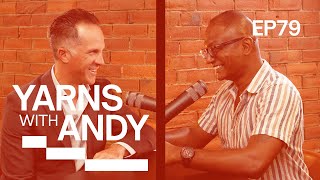
Alex Kay is a quantity surveyor with 7-8 years' experience, originally from Manchester, UK. He moved to New Zealand approximately two months before the recording (and "just before COVID" by his own framing) and works for Southbase Construction, a main contractor with offices in Christchurch, Auckland, and Queenstown. He was pursuing his RICS qualification at the time of recording. The "confidential Auckland project" he and Andy were both working on is the source material for Andy's debut 4D framework and the genesis case study for Strategic Planning Co.