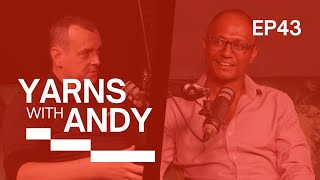
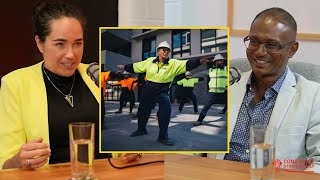
Brent Tassel & Hayden Bradfield
About This Episode
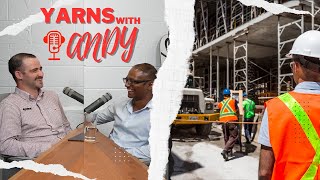
Brent Tassel and Hayden Bradfield, two digital technology specialists at the forefront of NZ construction digitalisation, deliver a damning diagnosis of the industry's digital maturity. NZ has "very poor respect for design", site-driven decisions create a self-fulfilling prophecy where design is treated as a "nice to have." We're still at BIM Level 1 (drawings contractual, model for information only), councils accept 2D PDFs not 3D models for consenting, and companies have up to 1,000 software subscriptions with no connected data ecosystem. The solution: centralized digital teams that retain talent, standardize processes, and carry learnings across projects instead of losing everything when each project disperses. References W50 project with Matt Stanford (Ep 04) as the one NZ job that worked, construction was in the design office.
Key Topics Discussed
- NZ disrespects design. Design treated as consequence of building, not deliberate activity. "We intentionally underbake design with the intention that guys in the field will sort out the rough edges." Self-fulfilling prophecy: every design is assumed non-constructible, so no one invests in making it constructible. "We're 180 degrees out."
- BIM Level 1 problem. NZ locked in Level 1: drawings are contractual, model is "for information only." By definition, the model doesn't matter. Nobody will indemnify digital data, so it has no commercial value. Modern structures too complex for 2D expression.
- Council consenting. Auckland Council requires pages of 2D drawings, not 3D models. Typical details are "catalog items detached from any real geometry." When modelled in 3D, details from different designers clash, discovered on site when it's too late.
- Japanese contractor example. Wharf excavation designed with 2D cross-sections only. When modelled in 3D, perpendicular pile faces clashed at corners. 3D model resolved the issue, loaded into excavator, problem solved before site mobilisation. "Always cheaper to solve in an office than in the field."
- Technology adoption resistance. Supervisors telling engineers to be "in the field counting trucks on a notepad" instead of doing digital design. 56-year-old supervisors scroll Facebook at lunch but won't use a digital diary app. Attitude is the #1 barrier.
- Software ecosystem missing. One company had ~1,000 software subscriptions with no connected data. Projects treated as small companies: born, evolve, disperse, all learning, software, hardware "blown to the four points of the wind." 300-400% staff turnover on some projects.
- Centralized digital team. Solution: company-wide digital services team controlling technology implementation. Standardized processes mean people are interchangeable across projects. Retain talent by rotating through different project types. Linear learning path instead of boom-bust per project. Builds culture and brand.
- W50 project. Referenced as "the only NZ job on time", construction team was in the design office, war-gaming the setup in concept before detailed design. Matt Stanford connection (Ep 04).
Notable Quotes
- Brent: "We have a very poor respect for design in New Zealand. We like to think of design as the poor country cousin of build."
- Brent: "We're locked in a self-fulfilling prophecy. Every design we get, you believe is not constructible."
- Hayden: "If you can't make all these parts fit together in a computer, you're never going to be able to do it in real life."
- Brent: "It's always cheaper to solve it in an office on a desktop than in the field when you've got hundreds of guys standing around and concrete trucks rotating."
Guest Background
Brent Tassel is a digital technology leader in NZ construction. Deeply experienced in BIM, design management, and the intersection of digital and physical construction. Advocates for BIM as contractual (not "for information only"), design indemnification, and centralized digital teams. Previously worked at Fletcher Construction.
Hayden Bradfield is a construction digital technology specialist. Started as a site engineer doing temporary works modeling in 3D (got told off for "sitting in the office"). Background in surveying and 3D modeling. Worked on infrastructure projects including one with a Japanese contractor. Advocates for digital diary tools, centralized tech teams, and integrated software ecosystems.