EP 87 · Yarns with Andy

Andrew Green

Hosted by Andy Alagappan
Data CentresHyperscaleAI InfrastructureGpu RacksLiquid CoolingPower GridEnergyHydroGeothermalNuclearSustainabilityModular ConstructionInfrastructure PipelineWhite Collar Blue CollarMental HealthAg Squared

About This Episode

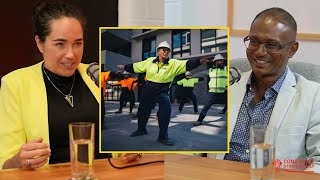
Andrew Green, 20-year data-centre veteran, formerly senior leader at Datacom's data-centre business for 12 years, now founder of AG Squared Consulting, sits down with Andy for the first YWA episode dedicated to the NZ data-centre boom and what it means for construction. Whangarei-born (UK passport, born in the UK, raised in Whangarei), Andrew "accidentally" landed in data centres on his OE in the UK 20 years ago, taking servers out of boxes and putting them into racks "that became the cloud." His hotel analogy ("a data centre is a giant hotel for IT equipment") becomes the spine of the episode: the building (powered shell) and the tenant (the hyperscaler) are entirely separate disciplines, and construction's opportunity is in the building. The numbers are staggering, Australia's data-centre construction pipeline is up 300% over the next 5 years while office-building work is down 30%; AWS has committed $7.5B to NZ infrastructure (Andrew flags the political controversy over the figure but says "it's value coming in, one way or another"); Microsoft is here; Data Grid is building a 280MW data-centre in Southland; total NZ data-centre power is forecast to grow from ~200MW base load today to ~600MW within 10 years (Andrew suspects sooner). Andrew's central diagnostic: the rack-density equation has been rewritten by AI liquid-cooled GPU racks. Twenty years ago a rack consumed 2kW; today an AI-cooled rack can pull 1MW, the same physical space delivers 500x the power demand and demands a massively expanded peripheral footprint (generators, chillers, cooling, backup). Construction implications cascade: zero-tolerance downtime, never-fully-built phased delivery (build out 10MW → 20 → 50 → 80 next to live tenants), exacting structural standards, and modularised pre-fabricated systems shipped to site. On NZ's positioning, Andrew is clear-eyed: NZ's competitive asset is its renewable base-load grid (hydro + geothermal), wind and solar are "terrible for data centres" because they're unreliable; nuclear (small modular reactors, mothballed-plant restarts in the US, Oklo's exploration) is where the global frontier is heading but won't sit comfortably in NZ's social licence. His vision: "data centres done well, not big", bespoke high-quality APAC-facing services using NZ's green grid in the way the Nordic region has, exporting energy as data down the trans-Tasman cable from a Southland-located hyperscaler rather than competing with America at scale. The career arc lands on Jensen Huang's "white-collar jobs are the new blue-collar jobs", plumbers, electricians, HVAC technicians, fabrication workers maintain the data-centre future while AI takes over programming. Andrew closes on mental health: running half-marathons / one full marathon, gardening, a 1990 two-stroke trailer boat, and "exercising while working", using a 5K to think through a problem and finishing the run with the solution.

Key Topics Discussed

  • The NZ data-centre boom. AWS $7.5B committed (Andrew flags PM-Luxon political confusion over the figure but says "the reality is it is value coming into NZ"); Microsoft active; Data Grid 280MW Southland under construction; 200MW → 600MW base load forecast over 10 years.
  • Australia: data-centre construction pipeline +300% over 5 years; office buildings -30%. Headline number from a recent industry presentation Andrew attended.
  • The hotel analogy. A data centre is a giant hotel for IT equipment. The hyperscaler (AWS, Microsoft, Google, Tencent, Alibaba) is the tenant. Building the hotel and renting the rooms are entirely separate construction + operations disciplines.
  • Rack density evolution: 2kW → 1MW per rack (500x). Twenty years ago, a thousand-rack data centre consumed ~2MW. Today a single AI liquid-cooled GPU rack can consume 1MW. Smaller IT footprint, dramatically expanded peripheral footprint (generators, chillers, cooling, backup, room for people).
  • Zero-downtime construction. Data centres have no tolerance for "we'll just turn you off for a few hours." Phased build-out (10MW → 20 → 50 → 80) happens next to live tenants. Methodology, design, people-flow, material-flow are first-class problems.
  • Never-fully-built. A data centre is rarely built complete on day one. Build the section that matches initial tenant demand; the next project tags on. Continuous construction work in the asset for its life. Andy: "from a methodology and programme perspective at SPC, this keeps me up at night."
  • Modularisation + containerisation. Pre-fab racks-and-systems shipped to site; not new but increasingly standard. Allows speed and parallel delivery. NZ has done this at small scale for individual enterprises but not yet at large-format commercial facilities.
  • Hyperscale defined. Catch-all phrase: massive cloud-provider deployment (AWS, Microsoft, Google, Tencent, Alibaba) at very large size. Speed of deployment is the market-driven characteristic, train your model and sell it before someone else does.
  • Why come to NZ? Two patterns: (1) small deployments serving the 5M NZ population (latency, locality); (2) large hyperscale facilities serving global APAC workloads from NZ. The second model depends on land + power + people + connectivity.
  • AI is not a bubble, it's an underlying infrastructure shift. "A bubble would burst. The AI revolution isn't going anywhere." GPU-based technology rewrote what data centres need to be. Some products built on top will fail; the underlying infrastructure needs to be built.
  • Data > oil. Andy's quote-from-elsewhere: "Data is more valuable than oil today." Andrew: "I wouldn't refute that for a second."
  • NZ 0.6% national energy from data centres today. Per NZ Tech industry-body report. Even adding the 280MW Data Grid build only takes NZ to ~1.5% of national energy use. "Not a big user of energy in the way it's perceived."
  • Renewable base-load is NZ's strategic asset. Hydro + geothermal are long-term stable generation, exactly what data centres pay premium for. Wind and solar are "terrible for data centres", unreliable, must be firmed up with something else. NZ's grid asset is differentiated from the rest of APAC.
  • Nuclear data centres, global, not NZ. Oklo (US), small modular reactor (SMR) initiatives, mothballed-plant restarts in the US for hyperscaler load. Long-term stable power, low emissions, high impact-if-fail risk. Won't fit NZ's social licence (legal here for generation, just no licence). Will power data centres in countries already comfortable with nuclear.
  • "Data centres done well, not big". Andrew's vision for NZ. Bespoke high-quality APAC-facing services using NZ's green grid. Exporting energy as data down the trans-Tasman cable from a Southland-located hyperscaler. Nordic Europe is the mental model.
  • Data centres as catalyst for upstream investment. A 200MW data-centre underwrites long-term stable power demand; that demand makes generation investment viable; that generation capacity then becomes available for everyone else as the data-centre ramps from 10MW base to full capacity.
  • Co-location with generation. Build a new dam, co-locate a hyperscaler with it. Use the reservoir for cooling. No transmission losses. "Some really cool symbiotic things", but you have to design the ecosystem, not just the data centre.
  • Self-driving cars analogy. Local low-latency inference (the car driving around Auckland needs to decide left/right here) vs. global training (the algorithm itself can be trained anywhere). NZ can credibly host the training workload for an APAC self-driving model.
  • White-collar jobs are the new blue-collar jobs. Andrew quotes Jensen Huang (Nvidia CEO). Plumbers, electricians, HVAC technicians, fabrication workers maintain the data-centre future. AI takes over programming. Pairs with Ep 78 Alex Hulme trade-devaluation reversal thesis and Gary Vee's "go become a plumber" advice (Andrew echoes).
  • NZ confidentiality discipline. Andy: "SPC has done methodology and programmes for a few data-centre builds here and overseas, for obvious reasons I can't name them." Andrew: "Same. The crazy confidentiality agreements you sign." Sets the recurring podcast pattern: data-centre clients are name-redacted.
  • Humanoid robots aside. $35K humanoids commercially available today (Andy is interested for housework); pair with Claude/Anthropic for control. Andrew: "Get the vacuum cleaner, do the work yourself."
  • Mental health. Half-marathons, one full marathon ("probably never again"), running with shoes anywhere in the world he travels, gardening, 1990 two-stroke trailer boat. "Exercising while working", 5K runs to think through problems and arrive at solutions.

Notable Quotes

"A data centre is a giant hotel for IT equipment. Nothing much more than that."

"When I started 20 years ago, a rack might pump 2 kilowatts. Now an AI liquid-cooled rack would potentially consume a megawatt of power. Smaller IT space, massively expanded peripheral space."

"Australia's data-centre construction pipeline is going up by about 300% over the next 5 years. Office buildings are at -30%. There's a huge amount of work in this space that's available to people."

"AI is not a bubble. A bubble would burst. The AI revolution isn't going anywhere."

"Data is more valuable than oil today.", Andy, citing reading; Andrew agrees: "I wouldn't refute that for a second."

"Wind and solar are pretty terrible for data centres, to be honest. Unreliable sources. You have to firm it up with something else anyway."

"I love hydro for data centres personally. Hydro and geothermal. Long-term, stable. The same way nuclear is long-term and stable."

"Data centres done well is better than just data centres done big. Use our environment and our landscape to our advantage. That's our asset."

"The white-collar jobs are now the blue-collar jobs. Plumber, electrician, HVAC guy, those are the jobs that are going to be around for data centres.", Andrew quoting Jensen Huang (Nvidia CEO)

"From a construction perspective, this keeps me up at night. As Strategic Planning, what we do is methodology and programmes, and we've been involved in a few data-centre builds here and overseas. For obvious reasons, I can't name them.", Andy, surfacing the SPC data-centre engagement footprint

"Exercising while working. It's an opportunity to meditate for three-quarters of an hour, work through a problem, finish the run and suddenly I've got the solution."

Guest Background

Andrew Green, born UK, raised in Whangarei (audio renders as "Fungare", transcription artefact). Dropped out of university, worked on a deer farm, grew plants for a living. Travelled to UK on his OE; a friend in tech got him an introduction to a cloud-computing company in early-2000s London. Took servers out of boxes and put them into racks "that became the cloud." Stayed 7 years in UK tech. Returned to NZ; 12 years at Datacom as senior leader in the data-centre business, through the NZ data-centre maturation period. Now founder of AG Squared Consulting (agsquared.consulting), "trying to help others come into the industry." Phone has been on 24/7 for 20 years (data-centre-industry hazard). Married to construction industry through Strategic Planning Co's data-centre engagements.

More Episodes
Tim Porter
EP 86
Tim Porter
Timber · Mass Timber
Anastasija Taranenko
EP 85
Anastasija Taranenko
Hvac · Building Services
Mahesh Muralidhar
EP 84
Mahesh Muralidhar
Startups · Venture Capital
Raji Rai
EP 83
Raji Rai
Project Management · Commercial Interiors
Dr Troy Cole
EP 82
Dr Troy Cole
Construction 4 0 · Hira
Ben Ransley
EP 81
Ben Ransley
Smart City · Urban Tech
Derek Bilby
EP 80
Derek Bilby
Concrete · Sustainability
Richard White
EP 79
Richard White
Equipment Hire · Market Recovery
Alex Hulme
EP 78
Alex Hulme
Electricians · Trade Group
Hugh Goddard
EP 77
Hugh Goddard
Civil Infrastructure · Employee Ownership
Vincent Revell
EP 76
Vincent Revell
Urban Planning · Co Housing
Nick Leggett
EP 75
Nick Leggett
Infrastructure NZ · Pipeline
Blair Chant
EP 74
Blair Chant
Project Controls · Andy Origin Story
Mark Roberts
EP 73
Mark Roberts
Construction Waste · Sustainability
Murphy O'Neal
EP 72
Murphy O'Neal
Innovation · Compliance
Jake Robinson & Amelia Robinson
EP 71
Jake Robinson & Amelia Robinson
Small Business · Social Media
Katherine Hall
EP 70
Katherine Hall
Vocational Education · Concove
Daniel Ross
EP 69
Daniel Ross
Construction Law · Nec3
Maria Mingallon
EP 68
Maria Mingallon
AI Adoption · Mott Macdonald
Daniel Small
EP 67
Daniel Small
Quantity Surveying · Pqs
Derrick Edward & Misha Afon
EP 66
Derrick Edward & Misha Afon
AI · Generative AI
Arena Williams
EP 65
Arena Williams
Labour Party · Housing
Lizzi Whaley
EP 64
Lizzi Whaley
Interior Design · Wellbeing
Pamela Bell
EP 63
Pamela Bell
Nziob · Prefab
Vincente Valencia
EP 62
Vincente Valencia
Ppp · Infrastructure Vision
Kevin Leadingham
EP 61
Kevin Leadingham
Brain Drain · Recruitment
Heather King
EP 60
Heather King
Tendering · Boom Bust
Cameron Luxton
EP 59
Cameron Luxton
Act Party · Lbp
Daiman Otto
EP 58
Daiman Otto
Dfma · Offsite Manufacturing
Shane Brealey
EP 57
Shane Brealey
Simplicity Living · Housing
Natasha Possenniskie
EP 56
Natasha Possenniskie
Etc · Engineer To Contract
Rafael Caso
EP 55
Rafael Caso
Mental Health · Mental Fitness
Silke Deul
EP 54
Silke Deul
Cultural Diversity · Immigration
Jono Lockwood
EP 53
Jono Lockwood
Construction Tech · AI
Murphy O'Neal
EP 52
Murphy O'Neal
Modular Construction · Aluminium
Ben Redwood
EP 51
Ben Redwood
Construction Tech · Sustainability
James Hunt
EP 50
James Hunt
Brain Drain · Australia
Chris Penk
EP 49
Chris Penk
Government Policy · Building Products
Mike King
EP 48
Mike King
Mental Health · Suicide Prevention
Alan Farragher
EP 47
Alan Farragher
Mental Health · Diamond Workwear
Janine Van Leeuwen
EP 46
Janine Van Leeuwen
Conscious Leadership · Servant Leadership
Alan O'Connor
EP 45
Alan O'Connor
Interiors · Relationships
James Braddock
EP 44
James Braddock
Residential Construction · BIM
Blair Chant
EP 43
Blair Chant
Government Vs Private · NZS 3910 Revision
Yash Idnani
EP 42
Yash Idnani
Architectural Design · Medium Density
Drew Knowles
EP 41
Drew Knowles
Mental Health · Stress
Gary Moore
EP 40
Gary Moore
Plumbing · Hydraulic Design
Simon Court
EP 39
Simon Court
Infrastructure Policy · Rma Reform
Sam Newell
EP 38
Sam Newell
Entrepreneurship · Young Professionals
Kieran Mackenzie
EP 37
Kieran Mackenzie
AI Vision · Safety Technology
Mark De Lacey
EP 36
Mark De Lacey
Interface Specifications · Contract Integration
Fiona Bycroft
EP 35
Fiona Bycroft
Diversity · Equality
Bjorn Guttenbeil
EP 34
Bjorn Guttenbeil
Prefab · Panelized
Bayard McKenzie, Ben Speedy
EP 33
Bayard McKenzie, Ben Speedy
Design Construct Divide · Mid Density
Brett Christie
EP 32
Brett Christie
Arrow International · Construction Collapse
Dave Morton
EP 31
Dave Morton
Geotechnical · Ground Risk
Hamish Race
EP 30
Hamish Race
People First · Civil Construction
Brighid Shelton
EP 29
Brighid Shelton
Behind The Scenes · Women In Construction
Panel
EP 28
Panel
Procurement · Panel Discussion
Declan Bannon
EP 27
Declan Bannon
Health And Safety · Scaffolding
Anonymous
EP 26
Anonymous
Government Procurement · Kainga Ora
Raveen Jaduram
EP 25
Raveen Jaduram
Leadership · Culture Change
Bryce Caldwell
EP 24
Bryce Caldwell
Market Downturn · Subcontractor Risk
Cian Brennan
EP 23
Cian Brennan
Contract Administration · Dispute Avoidance
Sanjesh Lal
EP 22
Sanjesh Lal
Housing Affordability · Public Private Collaboration
Jen Jones
EP 21
Jen Jones
Renovations · Budget Blowouts
John Baigent
EP 20
John Baigent
Margin Erosion · Transactional Competence
Michael McFadden
EP 19
Michael McFadden
Cash Flow · Early Payment
Brent Tassel & Hayden Bradfield
EP 18
Brent Tassel & Hayden Bradfield
Digital Technology · BIM
Brigitte Dunbar
EP 17
Brigitte Dunbar
Burnout · Wellbeing
Drew Knowles
EP 16
Drew Knowles
Mental Health · Stress
Murray Alcock
EP 15
Murray Alcock
Property Development · Standardisation
Shaun Foster
EP 14
Shaun Foster
Sales · Suppliers
Harriet Birchall
EP 13
Harriet Birchall
Recruitment · Labour Shortages
Ali Alshami
EP 12
Ali Alshami
Site Engineering · Unbuildable Design
Blair Chant
EP 11
Blair Chant
Subcontractors · Innovation
Raine Selles
EP 10
Raine Selles
Construction Law · Claims
Farzam Farzadi
EP 9
Farzam Farzadi
BIM · Digital Engineering
Timo Skog
EP 8
Timo Skog
Vertical Transportation · Supply Chain
Jordan Hetet
EP 7
Jordan Hetet
Build Only · Design And Build
Martin Edwards
EP 6
Martin Edwards
Eci Pcsa · BIM
Marc Parsons
EP 5
Marc Parsons
Lean Construction · Kaizen
Matt Stanford
EP 4
Matt Stanford
Last Planner · Project Controls
Brad Jones
EP 3
Brad Jones
Controls And Planning · NZ Vs UK
James Hunt
EP 2
James Hunt
Risk Management · Project Controls
Alex Kay
EP 1
Alex Kay
4D Planning · Quantity Surveying