Marc Parsons
About This Episode
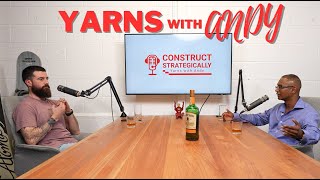
Marc Parsons joins Andy for the podcast's foundational entry on Lean and Kaizen in NZ construction, the "Japanese process for cutting waste" he's been deploying for 3-4 years. Marc's career arc is genuinely unusual: nine years in the NZ Army full-time (still in part-time at recording) teaching people how to plan operations, before transitioning to lean and continuous improvement, before joining NZ Post as Strategic Programme Manager for Digitalisation. The military planning discipline + the lean / continuous-improvement discipline + the digitalisation discipline are the three legs of his stool. He and Andy met at Fletcher Construction (first Auckland Airport, then Commercial Bay), and famously also at an antenatal class where they discovered they worked at the same company; their kids share a birth window. The conversation lays out the seven-or-eight wastes of lean (waiting, over-transporting, over-processing, etc.), Marc's emphasis on fact-based decisions as the alternative to "gut-call / emotion / lazy" leadership, and the practical reality of deploying Last Planner on big jobs. Marc's diagnosis of the Last-Planner-master-programme integration problem becomes the structural argument: you need either great leaders (the hard one) or digital tooling that doesn't yet exist (the unsolved one). Hannah Fletcher at Commercial Bay is Marc's reference example of "great leader who made it work." Kellam McCorkadel delivered Waterview 3 months early using lean. The episode closes with two systemic prescriptions: leadership development as professional qualification (BCITA trains trades but not managers; project management should require a recognised qualification) and a standardised "project data structure", zones and subzones, as the foundation for any meaningful integration of model + plan + checklist + project controls. Marc's parting vision: every tradesperson on site with Google-Glass-style integrated visibility of the entire stack.
Key Topics Discussed
- Lean Construction + Kaizen, the eight wastes. Plan-Do-Check-Act framework + 7-8 wastes (waiting, over-transporting, over-processing, motion, inventory, overproduction, defects, untapped human potential). "Hidden away everywhere, through everything we do everywhere in life." Concert + rugby ground queues as everyday-life examples.
- Kellam McCorkadel + Waterview, 3 months early via lean. Marc's reference example of NZ-context lean execution at scale.
- Last Planner, the post-it note power. "The most beautiful thing about Last Planner is when they put their task on that board, they are committing to doing that work. Where do you get that anywhere else?" Visual simplicity + colour-coded dependencies + personal commitment by placement = the unbeatable engagement mechanism.
- Last Planner weaknesses Marc identifies. no float visibility; no criticality marking. Marc's workaround: treat key milestones as immovable on the board. Adding quantities to tasks enables measurement and forward-projection.
- Fact-based decisions vs gut-call leadership. "A lot of our decisions as leaders are based on gut call, emotion, testosterone." Marc's work: building solid business cases "stacked up so that you can't say no" to force fact-based outcomes.
- The Andy + Marc complementarity. Andy: "I can take an entire system and boil it down into one diagram." Marc: "I'm the guy coming in and getting the trades to actually engage." Marc on Andy's gift: "you take this complex thing like Commercial Bay, massive vertical building, all these interacting components, and boil it into one diagram and someone like me who's not normally a construction guy could look at it and go 'oh, what's this?' And you're like 'exactly, yep that's a problem.'" The visual-simplification → trades-engagement conversion is what made Last Planner work for them.
- Last Planner integration problem, two paths. (a) the hard one: you need a great leader (Marc cites Hannah Fletcher at Commercial Bay); (b) the unsolved one: digital tooling that bridges Last Planner post-it notes to master programme doesn't yet exist. Same problem Ep 04 addressed via 8-week look-ahead + master-milestone integration on WK50.
- Construction Digitalisation, 15+ companies, none integrated. "Smart people building a lot of smart solutions, but nothing's integrated." Vision: Google Glass with integrated plan, checklist, project controls, every tradesperson seeing the full stack on site.
- Project data structure as foundation. Andy: "I've always called it a project data structure, zones, subzones. That's the first thing you'll ever do." Without standardised zoning, integration is impossible. Same WBS-alignment thread Andy hits on EP01 / EP03 / EP04.
- Leadership Development gap, the BCITA argument. "The most important job in construction is leadership to bring it all together. We need to invest in it." BCITA trains trades but not managers. Marc's prescription: project management should be a professional qualification requirement. Construction Accord (later mothballed per Ep 43 / Ep 70) was discussing a pre-qualified list.
- Engineer-to-Contract qualification gap. NZ has no qualification requirement for the Engineer-to-Contract role (unlike NZTA's pre-qualification). Construction Accord discussion of a pre-qualified list.
- Trades engagement = a different language. "Although I can talk to anybody. But you had to win them over and get them to plan ahead. They don't like planning ahead. They like to do it off the back of a bag packet." Over weeks: from no-planning to back-planning from milestones in a really simple way.
Notable Quotes
Marc: "Plan-Do-Check-Act and cutting waste, there's seven or eight wastes depending on which model you use. Things like waiting, over-transporting things, over-processing things. They're all hidden away everywhere, through everything we do."
Marc: "You need to make your decisions based on facts, fact-based decision-making."
Marc: "People often make decisions just probably lazily. They don't go and get the facts. So a lot of my work is actually getting really solid business cases that are stacked up so that you can't say no."
Marc (on Andy's gift): "You take this complex thing like Commercial Bay, massive vertical building, all these interacting components, and boil it into one diagram and someone like me who's not normally a construction guy could look at it and go 'oh, what's this?' And you're like 'exactly, yep that's a problem.' You make it simple and visual for people, and that was just really powerful."
Marc: "Although I can talk to anybody. But you had to win them over and get them to plan ahead. They don't like planning ahead. They like to do it off the back of a bag packet."
Marc: "There's two ways to make [Last Planner-master-programme integration] happen. One's hard and one is probably mostly unproven and not yet solved. The hard one is you need good leaders."
Marc: "The most beautiful thing about Last Planner is when they put their task on that board, they are committing to doing that work. Where do you get that anywhere else?"
Marc: "We need to invest in leadership. They need to get on to that. BCITA looks after trades, why not managers?"
Marc: "You've got smart people building a lot of smart solutions, but nothing's integrated."
Andy: "I've always called it a project data structure, zones, subzones. That's the first thing you'll ever do."
Guest Background
Marc Parsons, at time of recording, Strategic Programme Manager for Digitalisation at NZ Post. Previously: nine years full-time in the NZ Army (still in part-time at recording) teaching planning of operations. Career arc through lean / Kaizen / continuous-improvement consulting before NZ Post. Met Andy at Fletcher Construction (Auckland Airport then Commercial Bay), and at an antenatal class where they discovered they worked at the same company. Kids born in same window. Marc + Andy's project working relationship is the source of multiple SPC framing devices ("post-it note power"; complementary specialist + integrator pairing).